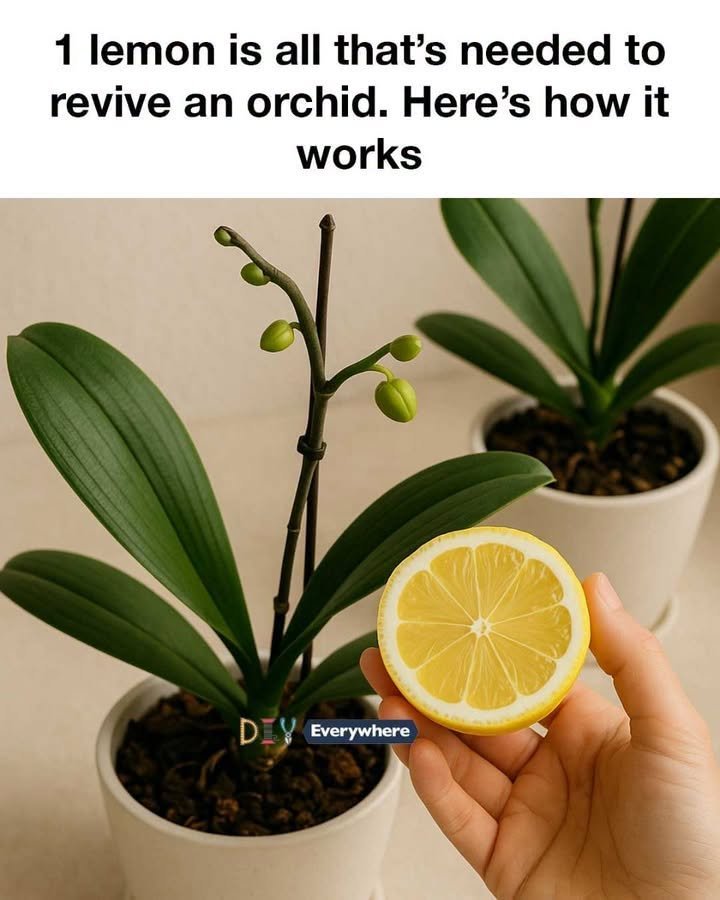

Have you ever looked at your beautiful orchid and wondered why it suddenly stopped blooming? Perhaps its leaves are losing their shine, its roots look unhealthy, or its flowers have disappeared. You water it regularly, provide sunlight, and try everything you can think of, but the plant still refuses to recover.
Many orchid lovers search for simple household remedies to bring their plants back to life. One popular suggestion involves an ordinary lemon.
But can one lemon really revive an orchid?
Lemon contains citric acid, vitamin C, and other natural compounds. However, orchids are sensitive plants, and adding lemon juice directly to their roots or growing medium can cause more harm than good.
The real secret is understanding what your orchid needs before trying any household remedy.
Let’s explore how to care for a struggling orchid and what you should know about the lemon trick.
1. Why Do People Use Lemon for Orchids?
Lemons contain several naturally occurring substances, including:
-
Citric acid.
-
Vitamin C.
-
Small amounts of minerals.
-
Natural plant compounds.
Because lemon is acidic, some gardening enthusiasts believe it can help adjust soil conditions or improve plant health.
However, ordinary lemon juice is not a balanced plant fertilizer. Its acidity can damage sensitive orchid roots, and there is no reliable scientific evidence that lemon juice revives dying orchids or encourages continuous flowering.
Important: Never pour undiluted lemon juice onto orchid roots or into the pot.
2. First, Understand Why Your Orchid Is Struggling
Before attempting to revive an orchid, identify the actual problem.
Common causes include:
Overwatering: Orchid roots need oxygen. Constantly wet growing medium can cause roots to rot.
Insufficient light: Many popular indoor orchids need bright, indirect light to grow and flower properly.
Poor drainage: Containers without suitable drainage can trap excess water around the roots.
Old growing medium: Orchid bark gradually breaks down and may retain too much moisture.
Temperature stress: Sudden temperature changes and cold drafts can damage sensitive plants.
Identifying the cause is the first step toward recovery.
3. Examine the Orchid’s Roots
Healthy roots are essential for orchid survival.
Carefully inspect the roots through the transparent pot or when repotting becomes necessary.
Healthy roots are generally:
-
Firm to the touch.
-
Green when hydrated.
-
Silvery or grayish when dry.
-
Free from unpleasant smells.
Unhealthy roots may appear:
-
Brown or black.
-
Soft and mushy.
-
Hollow or shriveled.
-
Unpleasantly rotten.
If you discover rotten roots, use clean, sterilized scissors to remove only the damaged portions.
Avoid cutting healthy roots simply because their color looks unusual.
4. Give Your Orchid the Right Water
Watering correctly is far more important than adding lemon juice.
Most common indoor orchids, particularly Phalaenopsis orchids, grow naturally on trees rather than in ordinary garden soil.
Their roots need moisture as well as airflow.
Follow these steps:
-
Check the growing medium before watering.
-
Water when the medium is approaching dryness.
-
Use room-temperature water.
-
Allow excess water to drain completely.
-
Never leave the pot sitting in standing water.
-
Keep water from collecting in the crown between the leaves.
The exact watering frequency depends on temperature, humidity, pot size, and growing medium.
5. Provide Bright, Indirect Light
Light is essential for healthy orchid growth and flowering.
Place your orchid near a bright window where it receives plenty of indirect light.
An east-facing window is often a suitable location.
Avoid intense afternoon sunlight because it can burn the leaves.
If the leaves become unusually dark green and the plant refuses to flower, insufficient light may be one possible explanation.
6. Use a Proper Orchid Fertilizer Instead of Lemon Juice
Orchids require essential nutrients for healthy roots, leaves, and flowers.
A balanced orchid fertilizer can provide nutrients such as:
-
Nitrogen for leaf growth.
-
Phosphorus for normal plant development.
-
Potassium for overall plant health.
-
Magnesium for chlorophyll production.
-
Micronutrients for essential biological processes.
Choose a fertilizer formulated for orchids and follow its dilution instructions carefully.
Never assume that a tablespoon is a safe amount for every product.
Too much fertilizer can cause salt accumulation and root damage.
7. Can Lemon Water Help Orchids?
This is where you should be particularly careful.
Some people recommend adding a few drops of lemon juice to water because they believe it helps orchids grow.
However, lemon juice does not provide the balanced nutrition orchids require.
Its acidity can also change the growing medium’s pH unpredictably.
For this reason, it is better to use clean water and a suitable orchid fertilizer rather than experimenting with lemon juice.
If your orchid is struggling, correcting its watering, lighting, drainage, and root health is a much safer approach.
8. How to Encourage Your Orchid to Bloom Again
Once your orchid begins producing healthy new roots and leaves, you can focus on flowering.
Try these simple techniques:
-
Maintain bright, indirect light.
-
Keep the plant away from cold drafts.
-
Avoid excessive watering.
-
Provide suitable orchid fertilizer.
-
Maintain good air circulation.
-
Allow the plant to follow its natural growth cycle.
Many mature Phalaenopsis orchids respond to a modest difference between daytime and nighttime temperatures.
Flowering may take several weeks or months, depending on the plant’s condition and growing environment.
9. Common Mistakes That Can Kill Orchids
Even well-intentioned gardeners sometimes make mistakes.
Avoid these common problems:
-
Pouring lemon juice directly onto roots.
-
Adding excessive fertilizer.
-
Watering every day without checking the growing medium.
-
Keeping the plant in a pot without drainage.
-
Exposing leaves to intense sunlight.
-
Using ordinary garden soil instead of orchid growing medium.
-
Ignoring signs of root rot.
-
Applying household chemicals to the leaves.
Remember that orchids are not ordinary garden plants. Their roots have different growing requirements.
10. How Long Does It Take to Revive an Orchid?
Orchid recovery requires patience.
If the plant still has healthy roots and leaves, it may begin showing signs of improvement within several weeks.
However, a severely damaged orchid may need several months to recover.
Look for encouraging signs such as:
-
New green root tips.
-
Firm, healthy leaves.
-
New root development.
-
A healthy growing crown.
-
Eventually, a new flower spike.
Don’t expect immediate flowers after changing the plant’s care routine.
Final Thoughts: The Real Secret to Reviving an Orchid
A lemon may be an ordinary kitchen ingredient, but it isn’t a miracle treatment for struggling orchids.
Although lemon contains natural compounds, there is no reliable evidence that adding lemon juice to an orchid will restore damaged roots, revive dying leaves, or guarantee new flowers.
The real secret is providing the right growing conditions.
Give your orchid clean water, suitable light, healthy roots, proper drainage, and balanced nutrition. Avoid unnecessary household experiments, and allow the plant enough time to recover.
Remember: A healthy orchid doesn’t need magical ingredients. It needs the right care, a suitable environment, and a little patience.