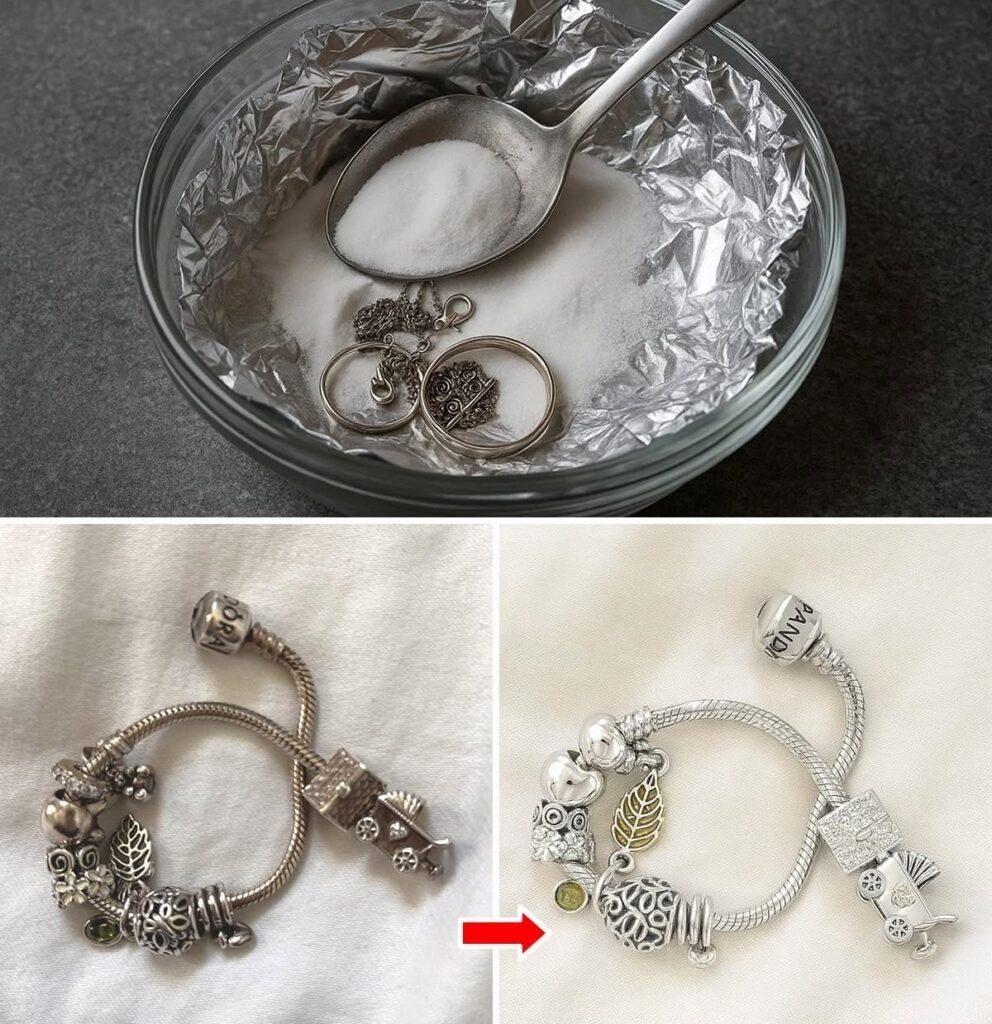

Have you ever taken out your favorite silver jewelry, spoons, necklaces, rings, or decorative items, only to discover that they have turned dark, dull, and almost black?
It can be disappointing, especially when the silver once had a beautiful shine. You might think it is permanently damaged or that you need to spend money on professional cleaning.
But don’t worry! In many cases, blackened silver can be restored using simple household cleaning methods.
The secret is understanding why silver becomes dark and choosing a cleaning method that removes tarnish without damaging the metal.
Let’s explore some easy and effective ways to bring back the beautiful appearance of your silver items.
1. Why Does Silver Turn Black?
Before cleaning silver, it’s important to understand what causes the discoloration.
Pure silver reacts with sulfur-containing compounds in the surrounding environment, forming a dark layer called silver sulfide.
This process is known as tarnishing.
Several factors can make silver tarnish faster:
-
Exposure to air containing sulfur compounds.
-
Humidity and moisture.
-
Perfumes and cosmetics.
-
Household cleaning products.
-
Certain foods and chemicals.
-
Improper storage.
The good news is that ordinary surface tarnish can often be removed without replacing the silver.
2. The Baking Soda and Aluminum Foil Method
One popular method for cleaning suitable solid silver items uses baking soda, aluminum foil, and hot water.
This method works through an electrochemical reaction that can transfer sulfur from the tarnished silver to the aluminum.
What you need:
-
A bowl.
-
Aluminum foil.
-
Baking soda.
-
Hot water.
-
A soft, clean cloth.
Step-by-step instructions:
-
Line the bottom of a heat-safe bowl with aluminum foil.
-
Place suitable tarnished silver items inside, ensuring contact with the foil.
-
Add hot water carefully.
-
Add a small amount of baking soda.
-
Allow the reaction to take place for a few minutes.
-
Remove the silver carefully using suitable utensils.
-
Rinse thoroughly with clean water.
-
Dry immediately using a soft cloth.
You may notice the dark tarnish becoming lighter.
Important precautions: This method is not suitable for every silver item. Avoid using it on antique silver, oxidized decorative finishes, glued jewelry, silver-plated items with damaged plating, or pieces containing pearls, gemstones, and delicate components. It can remove intentional dark detailing.
3. Clean Silver With Mild Dish Soap
Sometimes, silver looks black or dull because it has accumulated dirt, oils, and cosmetic residue.
A gentle cleaning method may be all you need.
What you need:
-
Mild dishwashing liquid.
-
Lukewarm water.
-
A soft microfiber cloth.
How to clean it:
-
Add a few drops of mild dish soap to lukewarm water.
-
Dip a soft cloth into the solution.
-
Gently wipe the silver surface.
-
Rinse away any soap residue.
-
Dry completely with a clean cloth.
This method is particularly useful for removing everyday dirt without aggressive polishing.
For delicate jewelry, avoid prolonged soaking.
4. Use a Special Silver Polishing Cloth
If your silver has developed ordinary tarnish, a specially designed silver polishing cloth can be one of the safest and easiest options.
These cloths contain materials designed to remove tarnish while polishing the surface.
Follow these steps:
-
Make sure the item is dry.
-
Rub gently using the polishing cloth.
-
Work in small sections.
-
Avoid applying excessive pressure.
-
Use a clean part of the cloth as needed.
This is a convenient option for silver rings, chains, bracelets, and other suitable pieces.
Avoid ordinary abrasive cleaning cloths because they may scratch the surface.
5. Can Toothpaste Clean Blackened Silver?
You may have heard that toothpaste can make silver shine again.
Although some people use this traditional trick, it is generally not recommended.
Many toothpastes contain abrasive ingredients that can scratch silver, damage delicate finishes, or wear away silver plating.
Instead, use a proper silver polishing cloth or a product specifically designed for silver.
6. How to Clean Silver Jewelry Without Damaging It
Silver jewelry needs extra attention because it may contain gemstones, decorative finishes, or delicate settings.
For ordinary solid silver jewelry without sensitive stones:
-
Prepare lukewarm water with a little mild dish soap.
-
Gently clean using a soft cloth.
-
Avoid aggressive scrubbing.
-
Rinse carefully.
-
Dry thoroughly.
For jewelry containing pearls, turquoise, opals, glued stones, or other delicate materials, avoid soaking and chemical cleaning solutions.
When in doubt, consult a professional jeweler.
7. How to Make Silver Shine Again
After removing tarnish, proper polishing can help restore the silver’s attractive appearance.
Try these simple tips:
-
Use a clean microfiber cloth.
-
Polish gently in straight movements.
-
Avoid rough sponges.
-
Never use steel wool.
-
Remove moisture completely.
-
Use a silver-specific polish when appropriate.
Remember that excessive polishing can gradually remove silver from the surface, particularly on silver-plated objects.
8. How to Prevent Silver From Turning Black Again
Cleaning silver is only half the job. Proper storage can help slow down future tarnishing.
Here are some useful habits:
Keep silver dry: Moisture can accelerate tarnishing.
Store items separately: Avoid allowing jewelry pieces to rub against one another.
Use anti-tarnish bags: Special storage bags can reduce exposure to tarnish-causing compounds.
Avoid perfume contact: Apply perfume and lotions before putting on silver jewelry.
Clean after use: Gently wipe away sweat, oils, and cosmetic residue.
Store in a cool, dry place: Avoid bathrooms and other humid areas.
These small habits can help keep silver looking beautiful for longer.
9. What About Antique and Silver-Plated Items?
Not all silver objects should be cleaned in the same way.
There is an important difference between solid sterling silver and silver-plated objects.
-
Sterling silver: Usually contains 92.5% silver and 7.5% other metals.
-
Silver-plated items: Have a thin layer of silver over another material.
Silver plating can wear away with aggressive polishing, revealing the metal underneath.
Antique silver may also have intentionally darkened areas that contribute to its decorative appearance.
For valuable antiques, heavily tarnished heirlooms, or items with damaged plating, professional cleaning is the safer option.
10. Common Mistakes to Avoid When Cleaning Silver
Before trying any cleaning trick, remember these important warnings:
-
Never use bleach on silver.
-
Avoid abrasive powders and rough scrubbers.
-
Don’t mix household cleaning chemicals.
-
Avoid harsh acids such as lemon juice and vinegar on delicate or valuable pieces.
-
Don’t use boiling water on jewelry containing glued stones.
-
Never assume that every darkened silver object is safe to polish.
Always identify the material and finish before selecting a cleaning method.
Final Thoughts: Bring Back the Beauty of Your Silver
Blackened silver doesn’t necessarily mean your favorite jewelry or household items are ruined.
In many cases, the dark appearance is simply tarnish that can be removed with appropriate cleaning techniques.
Mild dish soap, a silver polishing cloth, or the aluminum foil and baking soda method may help restore suitable silver objects.
The most important thing is to choose the right technique for the particular item and avoid unnecessary scrubbing or harsh chemicals.
Remember: Beautiful silver doesn’t need aggressive cleaning. Gentle care, proper polishing, and smart storage can help preserve its shine for years to come!